A First Visit to a Village Craft Fair Without Rushing Past the Crafts
A first visit to a village craft fair is easier when you know what to notice, what to ask makers, and how to leave room for an unhurried look.
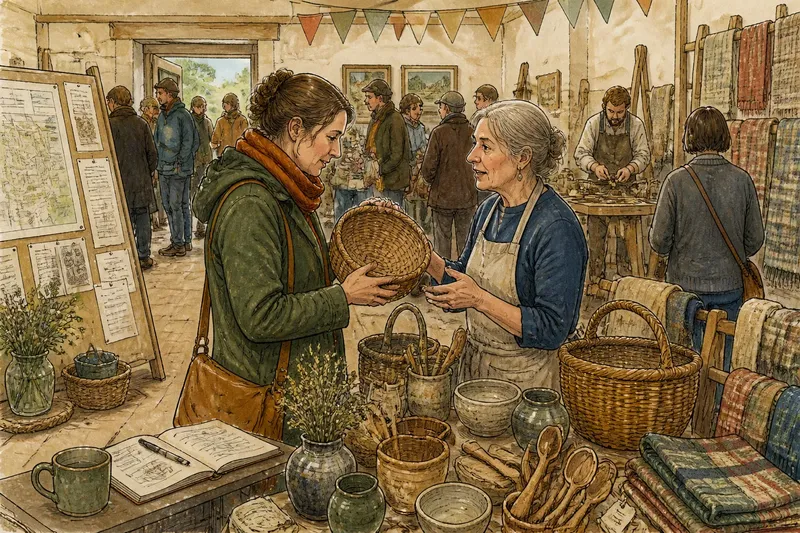
You reach a village craft fair just as a queue forms at the door, and suddenly the plan to look closely has become a plan to keep moving. A first visit to a village craft fair works better when you treat it as a place to notice materials and processes, not a row of stalls to clear. A few small adjustments can help if the room feels busy, a conversation stalls, or your attention gets pulled in six directions.
What if the room feels crowded before you have seen anything?
At a village hall, schoolroom, or covered market, a busy entrance can make the whole fair seem packed. Often the difficulty is simply that people are arriving together or stopping near the doorway to orient themselves. Trying to push straight through tends to make looking harder, not faster.
Step to one side if there is room, check the fair’s layout, and let the entrance clear. If stalls are arranged around the walls, begin at a quieter edge rather than following the first crowd. You can also pause near a noticeboard or refreshments table, provided you are not blocking either.
Look for a printed map, a list of makers, or a small sign showing demonstrations. These give you a sense of what is in the room without requiring a full circuit. If the fair is too crowded for close looking, take a short break outside and return when the doorway eases.
Choose a place to pause that does not interrupt someone else’s route.
How do you look closely without treating a stall like a display case?
Handmade work can invite a closer look, but there is a difference between examining an object and handling it. A woven basket may have an edge worth noticing; a glazed bowl may be marked as fragile. The maker’s arrangement, labels, and body language offer useful clues about what is available to touch.
Start with what you can see: how a wooden spoon’s grain follows its shape, where a patchwork seam changes direction, or how a potter has varied the surface of a piece. If you want to pick something up, ask first. That brief courtesy is more useful than guessing whether an object is sturdy.
Try looking at one material at a time. Compare the textures of wool yarn, linen, and plant-dyed fabric, or notice the difference between a smoothly turned wooden handle and one left with visible tool marks. This makes a short visit feel more attentive without turning it into an inspection.
Ask before touching, and let the maker set the pace of handling.
What can you ask a maker when you do not know the craft?
You do not need specialist vocabulary to start a conversation. A specific, open question is easier to answer than a broad request to explain everything. “What kind of wood is this?” or “How did you get that raised texture?” gives the maker a clear place to begin.
Questions about process often reveal more than questions about whether the work is difficult. You might ask which part takes the most attention, what a particular tool does, or how the maker decides when a piece is finished. If the maker is serving a customer or demonstrating, wait for a quieter moment rather than holding the conversation open by force.
Some makers may prefer to keep a process private, or may be busy. Accept a short answer and move on without treating it as a failed exchange. A fair is a working event as well as a social one.
Why do conversations at craft fairs sometimes go nowhere?
What if I cannot think of a good question?
Choose one visible detail and ask about it, such as a material, tool mark, or join. The question need not sound clever; it only needs to show what caught your eye.
What if the maker is busy?
Give them room to finish serving or explaining something to another visitor. You can look at the work quietly, then ask later if a natural pause appears.
What if I do not understand the answer?
Ask for one plain-language clarification, such as what a tool is used for. If the explanation remains unfamiliar, thank the maker and let the conversation rest.
What if I am not planning to buy anything?
You can still look respectfully and ask a concise question, but do not imply that you are considering a purchase if you are not. If the maker is occupied, browsing without a conversation is perfectly acceptable.
How can you avoid getting pulled into a buying decision?
A lively fair can make every object feel like the one you will regret leaving behind. Before you arrive, decide whether you are browsing, looking for a particular kind of work, or open to buying if something suits you. This is not a spending rule; it is a way to keep curiosity from turning into hurried decisions.
If a piece interests you, ask about its material, care, and intended use. For a woven item, that might mean asking whether it is made for regular handling; for a ceramic cup, ask how the maker recommends caring for its finish. Read any label the maker provides and follow the maker’s guidance for the object.
Say you arrive hoping to understand how local makers use natural materials, with no particular purchase in mind. You notice a basket made from willow, ask how the maker prepares the strands, and learn what makes the weave suitable for its intended use. The useful result is a clearer understanding of the craft, whether or not you take anything home.
If you are considering a purchase, step aside to think rather than deciding while someone waits at the stall. A maker can answer practical questions, but you are allowed to take time.
What if you have seen only a fraction of the fair?
Trying to visit every stall can make a fair feel like an errand. If your attention is fading, choose a simple route: look at the work nearest you, pause at one demonstration, then revisit anything that stayed in your mind. You do not have to cover the room evenly.
Demonstrations can be especially absorbing, but they may have a set schedule or limited viewing space. Check the posted information and arrive with enough time to watch without standing in a doorway. If you miss one, ask whether the maker is demonstrating again later rather than trying to reconstruct the whole process from a hurried glimpse.
Leave a little time for the parts that are not stalls: a notice about a local workshop, a conversation with an organizer, or a cup of tea in the adjoining room. These details help place the crafts in the life of the village without making the visit into a tour with a strict itinerary.
What should you do if the fair is noisier than expected?
Busy rooms can make conversation difficult, especially when several demonstrations are happening at once. Move toward an edge or an area away from the entrance, then focus on looking rather than trying to speak over the noise. If you want to ask a question, wait until the maker is not addressing a group.
Some fairs use shared halls with hard floors and high ceilings, so ordinary voices carry and overlap. Earplugs may help if you know that kind of room is uncomfortable for you. If the noise still makes it hard to enjoy the event, take a quiet break; staying for the whole fair is not a test of commitment.
For a first visit, the most useful aim is modest: notice a material, understand one process a little better, and give yourself permission to stop when you have had enough. A first visit to a village craft fair can be unhurried even when the room is lively, provided you choose what deserves your attention instead of trying to see everything.
Before leaving, check whether the organizer has posted details for another fair or a maker’s workshop. A note taken at the door may lead to a quieter chance to learn more, when the tools and materials have room to speak for themselves.