The Harvest Supper and the Long Memory of Shared Meals
A harvest supper connects fieldwork with a shared table, revealing how seasonal food, local labor, and changing customs carry memory across generations.
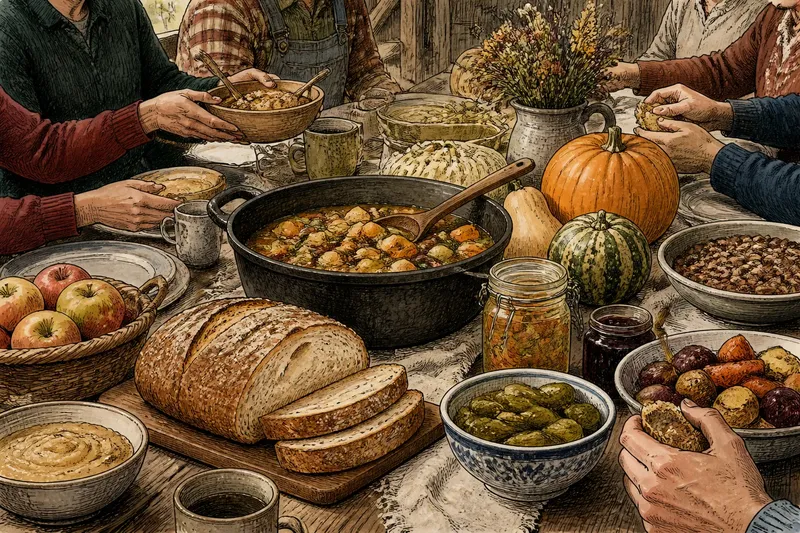
At a harvest supper, the potatoes may come from one garden, the bread from another kitchen, and the stories from fields no one works in quite the same way now. A harvest supper is more than a meal held near harvest time: it joins the work of bringing food in with the act of sharing it. The table makes that connection visible, even as ingredients, jobs, and customs change.
What makes a harvest supper different from an ordinary dinner?
The defining feature is the meal’s relationship to a season of work. In a farming household, harvest once meant a concentrated stretch of cutting, gathering, sorting, storing, and hauling. A communal meal could mark a pause in that labor, recognize the people who had done it, and turn a practical achievement into a shared occasion.
The supper did not need to take place at the field’s edge or follow a fixed ceremony. It might be held in a farmhouse kitchen, a barn, or a room borrowed for the evening. What mattered was the link between the food and the work: crops had been gathered, hands had helped, and people had something to eat together.
That link can remain meaningful where fewer guests farm for a living. A local grower’s vegetables, a neighbor’s baking, or a meal timed to the close of a community growing season can still give the gathering a specific reason. The food is not merely a rural decoration. It points back to labor, land, and the people who depend on both.
How does work become part of the meal?
Harvest work is often collective in ways a finished dish can conceal. One person may tend a crop; others help bring it in, carry it, sort it, or prepare it for storage. Cooking and serving extend that chain of effort. A supper gathers some of those contributions in one room, though the people at the table may not have done the same tasks.
That does not mean every guest must have worked in a field. The meal can honor a wider web of seasonal labor: the person who lends a vehicle, the neighbor who shares preserves, the cook who turns surplus vegetables into soup, or the household that offers a place to sit. Naming these contributions can keep a harvest supper from treating food as if it appeared by cheerful local magic.
Imagine a small community garden whose members have gathered the last squash and beans of the season. They set aside some vegetables for a shared stew, while others bring bread and a pot of applesauce. At supper, the garden’s volunteers describe what they grew and what they will store for later; the expected result is a meal that connects particular dishes to particular work, rather than a generic seasonal celebration.
When planning a communal meal, ask who made the food possible, not only who cooked it.
What belongs on the table?
There is no single harvest-supper menu. Local climate, crops, household habits, and storage methods all shape what can be served. In one place, a meal may center on potatoes, root vegetables, and bread. Elsewhere, it might include corn, beans, orchard fruit, smoked fish, or dishes built around grain. A shared supper reflects what people grow, raise, gather, preserve, and enjoy—not a universal catalogue of rural foods.
Preserved food matters because harvest is not only about what is ready to eat that day. Pickles, jams, dried herbs, smoked meat, and stored roots carry the season into colder or less productive months. Bringing them to the table makes preservation part of the story: someone had to select, prepare, and put the food away before the feast.
Some gatherings lean on dishes people already know how to make in quantity: stews, casseroles, pies, loaves, and large bowls of vegetables. Others are potlucks, where each household contributes a dish. Either format can work. A planned shared menu may make serving easier; a potluck may show a wider range of family and regional cooking. The choice depends on the gathering’s size, kitchen access, and who can reasonably contribute.
Keep the menu grounded in what contributors can actually prepare and bring. A humble dish with a clear local connection has more meaning than an elaborate menu that turns the evening into a production.
How have harvest suppers changed across generations?
Changes in farming and household life alter the shape of the meal. Mechanized equipment can reduce the need for large groups to perform certain tasks by hand. Fewer households may rely directly on farming, while some people grow food in gardens, allotments, or small orchards alongside other work. The supper can shift from a meal following shared field labor to an occasion that remembers that labor or celebrates local growing more broadly.
Timing and venue also change. A meal once organized around the end of a particular job may now be scheduled for a weekend when volunteers can attend. A family gathering can become a neighborhood event; a farm-based supper can include people whose connection to the harvest is through cooking, gardening, or community support. These changes do not make the newer form false. They change what the supper is able to gather together.
Across generations, recipes can carry continuity even when ingredients vary. A pie may follow a familiar family method while using fruit from a different source. A dish that once depended on a household’s own crop may now be made with produce from a local farm. The recipe holds memory, but the supply chain tells a newer story. Both can belong at the same table without pretending that nothing has changed.
Tradition, here, is not a sealed menu. It is a continuing habit of relating food to a season and sharing the result.
How can a harvest supper include people who do not farm?
A gathering can be open to people with different relationships to food and land, provided its purpose is clear. Some guests may grow crops; others may shop locally, cook, help serve, or simply come to share the meal. The event need not claim that everyone has done the same work. It can make room for different kinds of participation while keeping its connection to the season in view.
Practical arrangements shape who feels welcome. A host can explain whether guests should bring a dish, contribute to a shared meal, or arrive without anything to carry. Clear information about the venue, transport, and serving arrangements helps people decide whether they can attend. If a community has varied dietary needs, asking contributors to identify dishes and ingredients is a straightforward courtesy.
Participation can also mean listening. Older residents may remember how a particular crop was stored or what a family meal looked like; younger gardeners may describe how they grow food now. No one has to present a definitive account. The value lies in letting specific memories and current practices sit alongside one another.
What questions do people ask about harvest suppers?
When is a harvest supper usually held?
It is commonly tied to the end of a local harvest or growing season, but the relevant season depends on the crops and place. A community may choose a convenient date that still reflects what has recently been gathered.
Does a harvest supper have to use homegrown food?
No. Homegrown or locally produced ingredients can make the connection to place more immediate, but they are not a requirement. The gathering can also recognize seasonal work, preserved foods, and the people who prepare and share a meal.
Is a harvest supper the same as a harvest festival?
They can overlap, but a supper centers on eating together, while a harvest festival may include additional activities or displays. Local usage varies, so the name often reflects how the community understands its own event.
What can a guest bring if they are not a cook?
Follow the host’s request rather than assuming every guest should bring food. If contributions are welcome, useful options may include help with serving, a drink, or a simple item the host has asked for.
What does a shared harvest meal preserve?
A harvest supper preserves no single, unchanged custom. It can preserve a relationship: food comes from work, work depends on cooperation, and a meal gives people a reason to notice both. That relationship may be expressed through a family recipe, a garden’s last vegetables, or a gathering that makes room for people with different ties to farming.
The meal also gives local memory a place to be spoken rather than merely invoked. A guest can explain why a dish was made, who taught the method, or what has replaced an older way of storing food. Such details are more useful than a claim that the past was simpler. They show what people actually did and what they do now.
For anyone arranging a harvest supper, the most useful starting point is the food and work already present in the community. Ask what has been gathered, who wants to cook or help, and which memories people would like to share. The answers can shape a meal that feels rooted in its place without requiring the past to return intact.